
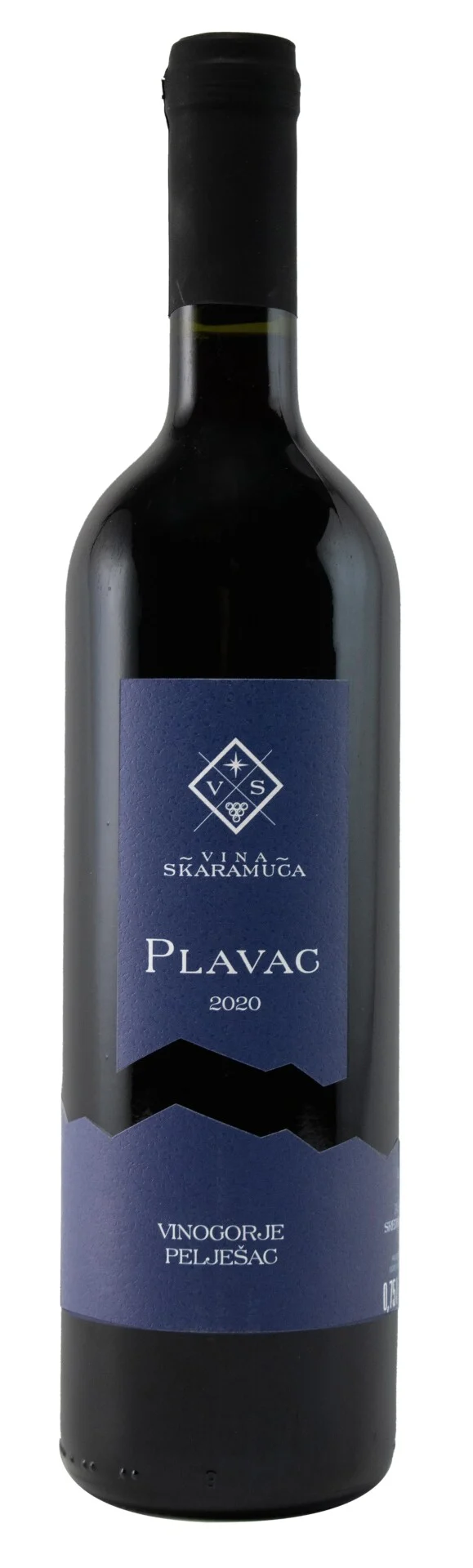


The Skaramuča Plavac wine exhibits a deep ruby red color with a dark blue gleam. The bouquet offers a refined blend of sweet notes of dried or baked fruit, subtle aromas of cherries, vanilla, coffee, and a hint of Dalmatian herbs. On the palate, this wine presents a powerful tasting experience with ripe nuances of cherries and plums, a touch of pepper, and pronounced tannins. This unique bouquet makes the wine memorable and distinctive. Due to its versatility, Skaramuča Plavac is an excellent companion for a variety of dishes, particularly hearty seafood dishes such as crab and baked fish. It also pairs well with grilled dishes, meat, game, and cheese. For an optimal experience, the Skaramuča Plavac should be served at around 18°C, allowing the complex aromas and flavors to fully unfold.
The Skaramuča winery was a pioneer in the independent production of wine in the Dalmatian wine region of Croatia, following national independence. The vineyards are located on the steep southern slopes of the Pelješac Peninsula, in the continental part. These slopes have an incline of 25 to 30 percent, allowing the vines to grow freely over the rocky soil without support. The yield per hectare is only three tons, and the harvest is done entirely by hand due to the inaccessibility of the terrain for mechanization.
Je moet 18 jaar of ouder zijn om deze website te bekijken.
De toegang is geweigerd i.v.m. jouw leeftijd.

